
Breathe Me
Sia
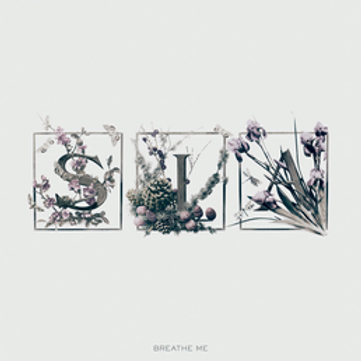

Breathe Me 🪷
Emotional Loops, Identity Loss, and the Quiet Courage of Asking to Be Held
Key Concepts in This Post:
Repeating the same patterns is not evidence of failure. It is evidence of how deep the roots go, and that is a different conversation entirely. 🔄
There is a specific kind of pain in being your own source of blame. It feels like accountability. It is often just self-punishment with better vocabulary. 🧐
Asking to be held, in whatever language is true for you, is not weakness. It is one of the bravest things a person can do in the middle of a dark stretch. 🤝
Losing yourself during a depressive episode is one of the most disorienting and least-discussed experiences in mental health. You are not imagining it. 🌫️
I have been "here many times before" too. This song made me feel less alone about that. It can do the same for you. 💙
I do not think I heard "Breathe Me" for the first time the way most people did. I did not watch the Six Feet Under finale in 2005, when the song played over the last few minutes of one of the most quietly devastating endings in television history, and feel the full weight of it in context. I came to it later, out of order, the way you stumble onto most things that eventually matter. A playlist late at night, the volume low, not paying close attention.
Suddenly I was paying close attention.
There is a particular kind of song that does not announce itself. It does not come in loud. It does not tell you that something important is happening. It just begins, and before you have had time to decide whether you are listening, it is already inside the room with you. "Breathe Me" is that kind of song. Sia wrote it at twenty-eight, and I do not know everything about where it came from for her, but I know what it sounds like. It sounds like the inside of a hard night. It sounds like the part you do not tell anyone about, not because you are hiding it, but because you have not found the words yet and the words in this song feel uncomfortably close to yours. 😔
I have been inside depression enough times to recognize what it feels like when a song finds you, rather than the other way around. This song found me during a stretch when I was doing okay on paper and not okay in any of the ways that mattered. The kind of okay where you are showing up, getting through the days, doing the functional things, and also disappearing quietly from the inside out. If you have been there, you know exactly what I am describing. If you have not, I hope this post helps you understand someone who has.
The through-line in this post is simple, and I want to name it upfront: the hardest part about these moments is not that they happen. The hardest part is that they keep happening, and somewhere along the way you start to believe that the repetition is the truth about who you are. This song lives right in the middle of that belief. The job of this post is to gently push back on it.
A Little Background 💿
Sia Furler wrote "Breathe Me" during a genuinely difficult period of her own life and released it in 2004 on her album Colour the Small One. It was not a commercial hit in the traditional sense. It found its audience slowly, one set of headphones at a time, the way the best songs sometimes do. The moment that changed everything for the song was the series finale of Six Feet Under in August 2005, when creator Alan Ball placed it under the show's final extended sequence. That scene follows each surviving character through the rest of their life, ending in death, one after another, until the screen goes dark. "Breathe Me" plays under all of it. Millions of people heard the song for the first time in that context, already wrecked, and it became something they carried.
Sia has spoken over the years about her own mental health struggles with openness and specificity. "Breathe Me" is the sound of that honesty without the benefit of distance. It is not a song written from the other side of something. It is written from inside it. That distinction shows up in every lyric, which is why the song still lands the way it does twenty years later. You cannot manufacture the particular quality of having actually been somewhere. The song is that quality, four minutes and fifty-eight seconds of it. You feel it immediately. It asks nothing of you except to stay and listen.
The Lyrical Links 🔗
Here is where the song earns its place on this blog. These are the lines that speak to me and what I think they are really saying about mental health.
🔄 "I have done it again, I have been here many times before"
Theme: The Repetition Loop. Knowing the Pattern and Still Being Inside It.
This is the first thing the song says, and it says everything. Not "I am hurting for the first time." Not "something new and terrible has happened." The opening line is an acknowledgment that this place is familiar. The narrator has been here. They recognize the furniture.
That recognition without relief is one of the most specific and least-discussed experiences of living with anxiety or depression. You can know exactly what is happening, name it accurately, trace its origins, describe it to a therapist in precise and careful language, and still find yourself back in the same room. The knowledge does not unlock the door. It just lets you describe the room more accurately while you are still in it.
I have been here many times before. That sentence is true for me in ways that are not metaphorical. Bipolar disorder does not care that I know its patterns. Depression has a reliable set of moves and I can see them coming and they come anyway. There was a stretch several years back, before the medication was right, when I would hit the same wall every few months with reliable, exhausting predictability. Donna saw it. I saw it. Naming it did not stop it. What naming it did was begin to remove the shame of being back again. The pattern was not a moral failure. It was a thing that was happening, and things that happen can eventually be addressed, even when they cannot immediately be stopped. That is the beginning of something. It is not the end of anything.
🧐 "Hurt myself again today, and the worst part is there's no one else to blame"
Theme: The Difference Between Accountability and Self-Punishment. They Are Not the Same Thing.
There is a quiet danger in this line that I want to name carefully. On the surface, it sounds like ownership. Taking responsibility. No excuses, no scapegoating, just the plain acknowledgment of what happened. Here is what I have learned: that kind of statement can be honest accountability, or it can be shame dressed in accountability's clothing. The difference matters more than almost anything else in recovery.
Accountability says: I did this, and I want to understand why, and I want to do something different. Self-punishment says: I did this, I am the problem, understanding is a luxury I have not earned yet. The second version removes the possibility of curiosity. When there is no one else to blame, you close the case.
The verdict is in. Nothing can be learned because the answer is simply you.
My therapist introduced me to a concept years ago that I keep returning to: self-compassion is not the opposite of accountability. It is what makes accountability functional. If you are fully occupied punishing yourself for the pattern, you never have the space to actually examine it. I have lived in both versions of this. The self-punishment version feels more honest in the way that flagellating yourself always feels more honest than going gently with what hurts. It is not more honest. It is just louder. Loudness is not the same as truth. 😌
🤝 "Be my friend, hold me, wrap me up"
Theme: The Ask That Costs Everything. And Why It Is Worth Making Anyway.
With no hesitation in this line, the song does something that most people cannot do in a lifetime of hard conversations. It asks. Directly. Without a paragraph of qualifications first, without checking whether the timing is right, without making the ask seem smaller than it is. "Be my friend, hold me, wrap me up." The vulnerability in those eight words is almost unbearable, and I mean that as the highest possible compliment.
Asking for help is the thing this blog keeps circling back to, because it is the thing I spent years being unable to do. The inability did not come from a lack of need. It came from what asking would confirm about me: that I was too much, that I was more than the people I loved could hold, that the need itself was the problem. I got very good at performing the version of myself that did not need anything from anyone. That performance is expensive. It cost me things I am still in the process of getting back.
What I want to say about this lyric is that the act of naming what you need, even quietly, even imperfectly, even in a song you play at two in the morning when nobody else is around, is not a small thing. That is how it starts. You say what you need once, even to no one. Then maybe you say it again to someone. That progression is available to every person reading this. Small. Honest. Specific. Enough. 💙
🌫️ "Unfold me, I am small and needy"
Theme: Shame Around Needing Support. Why This Is Not a Confession but a Door.
This lyric is incredibly powerful. There is also a precision to it that is almost clinical, except it is the opposite of clinical. No one in a therapy office would phrase it this way. This is what it actually sounds like on the inside, in the language that does not get cleaned up before it reaches another person.
"Small and needy" is the thing people with depression and anxiety are most afraid of being seen as. Every coping mechanism, every performance, every managed presentation to the outside world is at least partly in service of not appearing small and needy. The reveal of it, stated plainly and without apology, lands differently than you might expect. The result is not humiliation. It is relief.
I have felt small. I have been needy in ways I did not have the courage to name at the time, ways that showed up sideways as irritability or withdrawal or the particular exhausted silence I sometimes go into that Donna knows how to read even when I cannot explain it. The version of me that admits to being small and needy is not a diminished version of me. It is a more honest one. The admission does not make you smaller. It makes you reachable, and reachable is the beginning of being helped. 💙
✨ "Warm me up and breathe me"
Theme: Emotional Numbness. The Body's Need to Feel Something Again, and Why That Is a Legitimate Ask.
This is survival language. Not dramatic, not embellished. Just the most fundamental thing a person can ask for when they have gone numb.
Emotional numbness does not get discussed enough in conversations about depression. People picture depression as sadness, and sometimes it is. The version that is harder to explain and harder to treat is the version that is not sad so much as absent. Empty. A flatness where feeling used to live. It is less dramatic and less visible than visible distress, which makes it harder to communicate to the people around you and harder to get help for. You can sit across from someone who loves you and not be fully there. They know it. You know it. Neither of you has the words for it yet.
"Warm me up" is the request of someone who has gone cold in a way that has nothing to do with temperature. "Breathe me" is asking someone to help you find your way back to your own body, your own presence, your own aliveness. Those are not poetic images. That is what co-regulation actually feels like when it is working: someone else's steadiness becoming something you can borrow until you find your own again. I have borrowed it from Donna. I have borrowed it from my therapist. I have borrowed it from the right song at the right moment. There is no shame in borrowed warmth. It keeps you alive while you find your way back to generating your own. 🌅
🌫️ "Ouch, I have lost myself again"
Theme: Identity Loss. One of the Most Disorienting and Least-Discussed Experiences in Mental Health.
"Ouch." That single word, sitting at the front of the lyric, does more work than most people realize. It is not a dramatic cry. It is a small sound. The kind you make when you step on something unexpectedly, something that was right there in your own home and still managed to catch you off guard. Sia is describing the experience of losing yourself as something that still surprises her, even though she has been here before. The "again" at the end makes it worse and better at the same time.
Losing a sense of yourself during a depressive episode or an anxiety spiral is one of the most disorienting experiences in mental health and one of the least represented in the conversations people have about it. It is not dramatic. It does not announce itself. One day you notice that the version of you who used to find certain things funny is not available. The version who cared about particular things does not seem to be around. You are functional. You are present in the technical sense. The person inside the function feels like a stranger wearing your clothes.
I know this experience. There were years, not days or weeks, years, when I felt like I was watching myself from a step behind, narrating a life I was not quite living. The medication helped. Therapy helped. Coming back to the things I have always loved, Phish, the guitar I play badly but love fiercely, the early mornings with Wrigley, those things helped in a different and necessary way. Identity is not always something you find in one moment. Sometimes it is something you keep returning to, piece by piece, until enough of the pieces are back in the room that you recognize the shape of yourself again. That is allowed. That is actually how it works, more often than the tidy stories suggest. 😔
The Painful Truth 🎙️
This song is not easy for me to write about. The difficulty is not distance from the material. It is proximity. The repetition, the self-blame, the numbness, the identity loss: these are not abstract themes I am analyzing from a comfortable remove. They are a description of specific years of my life, some of them recent enough that the distance is not as comfortable as I would like it to be.
I have been here many times before. That sentence, the first line of this song, is true for me in ways I am still making peace with. The question I used to ask, every time I found myself back in a familiar dark place, was whether the return proved something about me. Whether the repetition was the verdict. My therapist has addressed that framing more than once, with patience I have not always deserved. The answer is always the same: the return is not the verdict. The repetition is information. Something is not finished being worked on. Something has not been fully reached yet.
Here is what I have come to understand: the return is not failure. It is an invitation, and I mean that in the most unglamorous possible way, not as a poster on a wall. The invitation is just this: look again. Try again. Stay in the room. The song does not fix anything. It just makes it possible to stay long enough to do the actual work. For a lot of people in a lot of hard moments, that is not a small thing. That is sometimes everything. 💛
Your Takeaway✏️
Two honest questions. No pressure, no grade. Just something worth sitting with this week.
Is there a pattern in your life you have been treating as a verdict about who you are, when it might actually be information about something that still needs attention? Can you hold those two framings side by side without collapsing them into each other?
Is there someone in your life you could say "hold me, wrap me up" to, in whatever language is actually true for you? Not the version you have cleaned up for public consumption. The actual version. What would it take to say it?
"I have lost myself again." That "again" is not the worst part. The worst part would be staying lost. The word "again" means you have found yourself before. You know the way back exists.
Take gentle care of yourselves and of each other.
Keep going,
Blake
Disclaimer: While music can be a powerful tool for emotional well-being, it is not a substitute for professional mental health support. The information in this blog is intended for general informational purposes only and does not constitute medical or professional advice. I am not a trained mental health expert. If you are struggling, please reach out to a qualified therapist or counselor. If you are in immediate danger, call 911. You can also contact the Suicide and Crisis Lifeline by calling or texting 988, or text HOME to 741741 to reach the Crisis Text Line.